
Meta Description: Explore the most famous cybercrime cases in history, how they happened, their impact, and the lessons that can help you stay safe online.
Introduction
Cybercrime has become one of the biggest threats in today’s digital world. From massive data breaches to ransomware attacks that shut down hospitals and businesses, cybercriminals have caused billions of dollars in damages worldwide.
Understanding famous cybercrime cases helps us learn how these attacks happen and what we can do to prevent them. In this article, we will explore some of the most well-known cybercrime incidents in history, their impact, and the important cybersecurity lessons they teach.
Table of Contents
- What Is Cybercrime?
- Why Famous Cybercrime Cases Matter
- The Morris Worm (1988)
- Yahoo Data Breach (2013–2014)
- Equifax Data Breach (2017)
- WannaCry Ransomware Attack (2017)
- NotPetya Cyberattack (2017)
- Twitter Bitcoin Scam (2020)
- Colonial Pipeline Attack (2021)
- Common Lessons from Famous Cybercrime Cases
- Cybercrime Prevention Tips
- Useful Cybersecurity Tools and Resources
- FAQ
- Conclusion
What Is Cybercrime?
Cybercrime refers to criminal activities that use computers, networks, or the internet to commit illegal acts. Cybercriminals target individuals, businesses, and governments to steal information, money, or disrupt operations.
Common types of cybercrime include:
- Hacking
- Data breaches
- Identity theft
- Phishing attacks
- Ransomware attacks
- Financial fraud
- Malware distribution
As internet usage grows, cybercrime continues to increase. Security experts estimate that cybercrime costs the global economy trillions of dollars every year.
Why Famous Cybercrime Cases Matter
Studying real-world cybercrime incidents provides valuable insights into how hackers operate.
These cases help us:
- Understand common attack methods
- Learn from past mistakes
- Improve cybersecurity awareness
- Develop better security practices
- Protect personal and business data
Many modern cybersecurity strategies were developed after organizations learned hard lessons from major cyberattacks.
1. The Morris Worm (1988)
What Happened?
The Morris Worm is often considered one of the first major cybercrime incidents in internet history.
Created by Robert Tappan Morris, the worm was intended to measure the size of the internet. However, a programming mistake caused it to spread uncontrollably across connected computers.
The worm repeatedly copied itself, consuming system resources and causing many computers to slow down or crash.
Impact
- Around 6,000 computers infected
- Millions of dollars in damages
- Significant disruption to early internet systems
Key Lesson
Always test software carefully and understand the potential consequences before deployment.
2. Yahoo Data Breach (2013–2014)
What Happened?
The Yahoo data breach remains one of the largest data breaches ever recorded.
Hackers gained access to user account information, including:
- Email addresses
- Passwords
- Phone numbers
- Security questions and answers
Yahoo later revealed that approximately 3 billion accounts were affected.
Impact
- 3 billion user accounts compromised
- Massive loss of customer trust
- Reduced company valuation
Key Lesson
Strong password encryption and rapid breach detection are essential for online platforms.
3. Equifax Data Breach (2017)
What Happened?
Equifax suffered a devastating cyberattack after hackers exploited an unpatched software vulnerability.
The breach exposed:
- Social Security numbers
- Birth dates
- Addresses
- Driver’s license details
Impact
- 147 million people affected
- Hundreds of millions of dollars in settlements
- Long-term identity theft risks
Key Lesson
Organizations must apply security updates and patches immediately.
4. WannaCry Ransomware Attack (2017)
What Happened?
WannaCry was one of the most destructive ransomware attacks ever seen.
The malware exploited a vulnerability in Microsoft Windows systems. Once infected, computers had their files encrypted and victims were asked to pay a ransom in Bitcoin.
Impact
- More than 200,000 computers infected
- Over 150 countries affected
- Major disruption to hospitals and businesses
Real-World Example
The UK’s National Health Service (NHS) suffered severe disruptions. Hospitals canceled appointments and delayed medical procedures because systems became inaccessible.
Key Lesson
Regular software updates are one of the most effective cybersecurity defenses.
5. NotPetya Cyberattack (2017)
What Happened?
NotPetya appeared to be ransomware but was actually designed to destroy data permanently.
The attack spread through compromised software updates and quickly infected organizations worldwide.
Impact
- Billions of dollars in losses
- Global business disruption
- Supply chain interruptions
Key Lesson
Companies should carefully monitor and verify software updates from third-party providers.
6. Twitter Bitcoin Scam (2020)
What Happened?
Hackers compromised internal Twitter systems through social engineering techniques.
They gained control of high-profile accounts and posted fake Bitcoin giveaway messages.
Impact
- Millions of users exposed to the scam
- Financial losses for victims
- Damage to platform reputation
Key Lesson
Employee cybersecurity training is critical for preventing social engineering attacks.
7. Colonial Pipeline Attack (2021)
What Happened?
A ransomware group infiltrated Colonial Pipeline’s systems and encrypted important company data.
Operations were temporarily shut down to contain the attack.
Impact
- Fuel shortages
- Panic buying
- Economic disruption
Key Lesson
Critical infrastructure organizations must invest heavily in cybersecurity protection.
Common Lessons from Famous Cybercrime Cases
Although these cybercrime incidents differ in many ways, several patterns appear repeatedly.
Weak Passwords Create Opportunities
Many attacks begin with stolen or weak passwords.
Software Updates Are Essential
Unpatched vulnerabilities remain one of the most common attack methods.
Employees Need Security Training
Human mistakes often help cybercriminals gain access.
Data Backups Are Critical
Backups help organizations recover from ransomware attacks.
Early Detection Reduces Damage
The faster a breach is discovered, the less damage attackers can cause.
Cybercrime Prevention Tips
For Individuals
- Use strong, unique passwords
- Enable multi-factor authentication
- Avoid suspicious emails and links
- Keep software updated
- Install reliable antivirus software
- Back up important files regularly
For Businesses
- Conduct security awareness training
- Monitor networks continuously
- Implement access controls
- Perform regular security audits
- Create incident response plans
- Patch vulnerabilities quickly
Useful Cybersecurity Tools and Resources
Password Managers
- Bitwarden
- 1Password
- KeePass
Antivirus Solutions
- Microsoft Defender
- Malwarebytes
- Bitdefender
Security Learning Resources
- CISA Cybersecurity Resources
- NIST Security Framework
- OWASP Security Guides
Vulnerability Scanners
- Nessus
- OpenVAS
- Qualys
Internal Linking Ideas
Link this article to:
- What Is Ransomware?
- How to Create Strong Passwords
- Common Phishing Scams Explained
- Best Antivirus Software
- Cybersecurity Tips for Small Businesses
- What Is Multi-Factor Authentication?
- How Data Breaches Happen
Suggested Featured Image
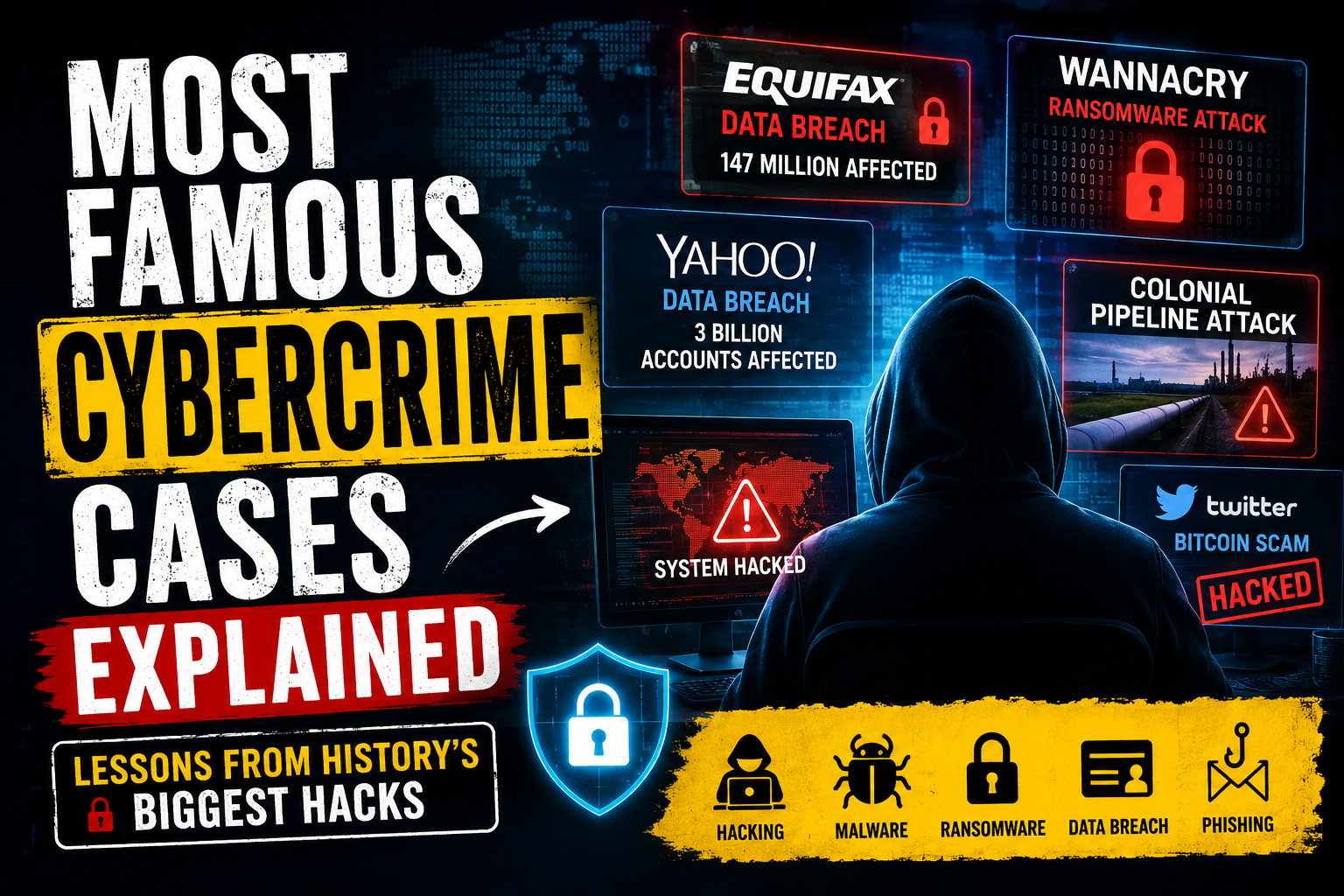
Image Idea: A hooded hacker sitting in front of multiple screens showing data breach alerts, ransomware messages, and cybersecurity warnings.
Alt Text: Most famous cybercrime cases explained with hacker and cybersecurity concept.
Frequently Asked Questions (FAQ)
1. What is the biggest cybercrime case in history?
The Yahoo data breach is considered one of the largest because approximately 3 billion accounts were affected.
2. What is ransomware?
Ransomware is malware that encrypts files and demands payment to restore access.
3. How do hackers steal personal information?
Hackers use phishing emails, malware, weak passwords, and software vulnerabilities.
4. Can small businesses be targeted?
Yes. Small businesses are frequent targets because they often have weaker security defenses.
5. What is a data breach?
A data breach occurs when unauthorized individuals access confidential information.
6. How can I protect my online accounts?
Use strong passwords, enable multi-factor authentication, and monitor account activity regularly.
7. Why are software updates important?
Updates fix security vulnerabilities that hackers may exploit.
8. Is cybercrime increasing?
Yes. Cybercrime continues to grow as more people and businesses rely on digital technologies.
Conclusion
The most famous cybercrime cases show that no organization is completely immune to cyber threats. From the Morris Worm to the Colonial Pipeline attack, these incidents changed how businesses, governments, and individuals approach cybersecurity.
The good news is that many cyberattacks can be prevented through simple security measures such as strong passwords, multi-factor authentication, software updates, employee training, and regular backups.
By learning from past cybercrime cases, individuals and organizations can build stronger defenses against future threats and stay safer in an increasingly connected world.