Business Email Compromise Prevention: Email Security, DMARC and Payment Controls
CYBERSECURITY EXPLAINER · THE CYBER CRIMES
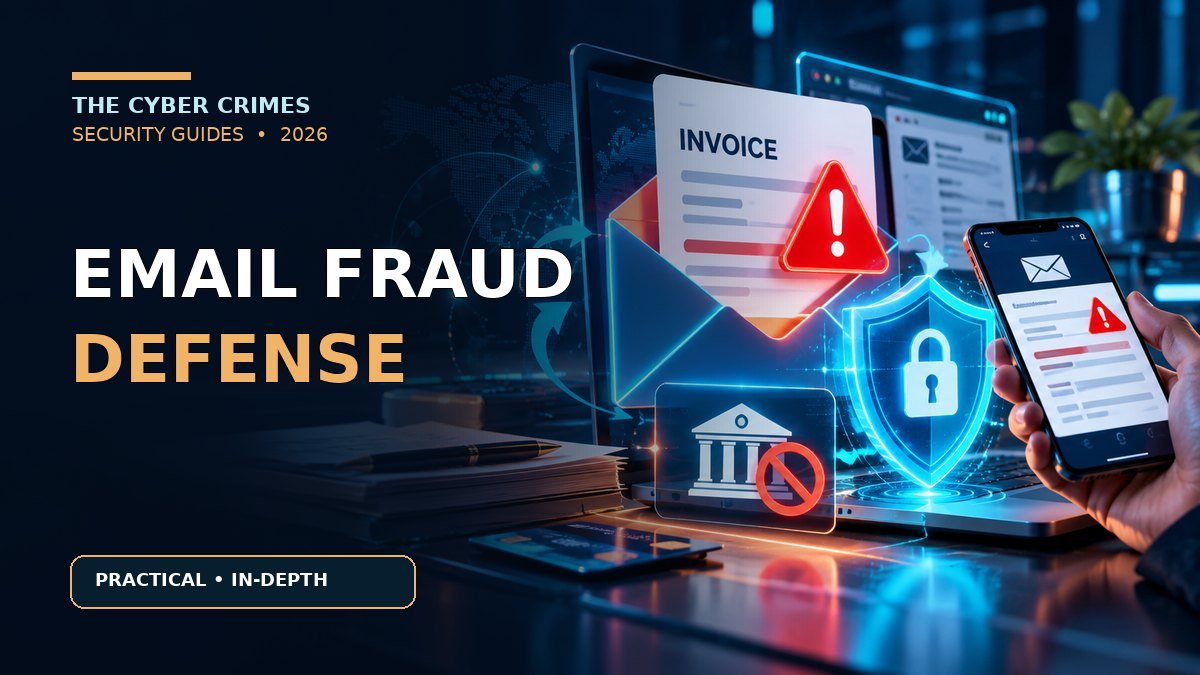
Business email compromise often looks like ordinary work. A convincing invoice arrives, a supplier asks to update bank details or a senior manager demands an urgent transfer. Because attackers can impersonate familiar people or compromise legitimate accounts, filtering alone cannot make a payment workflow safe.
The practical goal of this guide is to make a real decision easier. It explains how the category works, what buyers or operators should verify, and where a misleading promise can create risk. Examples are illustrative rather than forecasts, quotes, legal advice or endorsements. Availability and requirements may change by country, provider, organization size and contract terms.
Email security controls can reduce spoofing and malicious messages, but business email compromise also exploits trust, compromised real accounts and weak payment procedures. Independent verification of bank-detail changes remains essential.
Why business email security solutions Matters in Real Life
Before selecting a provider or changing a process, define the business outcome you are protecting. An organization should know who owns the relevant accounts and data, which activities would stop during an incident, and what evidence is available to assess whether a control is working. This avoids measuring security by the number of subscriptions purchased. A useful written plan can be maintained by a small team and reviewed after meaningful changes.
For finance teams, administrators and small business owners handling supplier payments, the important question is how to reduce invoice fraud and impersonation risk across email and payment workflows. Good decisions acknowledge uncertainty and use realistic examples instead of promises of perfect safety. A plan should remain readable for staff who are not cybersecurity specialists, because they are often the first people who notice a problem.
How invoice and supplier impersonation works
Attackers may spoof display names, register lookalike domains, access compromised mailboxes or interfere with existing business conversations. The message can contain accurate transaction details, making simple spelling checks unreliable.
Practical example: how invoice and supplier impersonation works
An accounts clerk receives a message inside a genuine email thread asking that future payments go to a new account. The sender mailbox itself may have been compromised, so the familiar thread is not sufficient proof.
What to verify: List the channels used to confirm changes to supplier banking details, and make sure they do not rely on the suspicious message. Record who can answer the question and what evidence supports the conclusion. This makes the decision easier to audit and explain later.
MFA and account compromise prevention
Protect finance, administration and mailbox accounts with MFA and strong account recovery rules. Review sign-in events, legacy authentication, delegation and forwarding settings. A trusted sender can still become a fraud channel if their account is taken over.
Practical example: mfa and account compromise prevention
A phished user unknowingly approves an unexpected login prompt. Repeated MFA prompts are a signal to investigate, not simply a nuisance to dismiss.
What to verify: Verify that high-risk users have MFA and that suspicious forwarding rules can be detected quickly. Record who can answer the question and what evidence supports the conclusion. This makes the decision easier to audit and explain later.
SPF, DKIM and DMARC explained without jargon
SPF identifies permitted senders under defined circumstances, DKIM supports cryptographic message signing, and DMARC helps a domain publish handling policies for authentication failures. These controls can reduce some domain spoofing but cannot stop every impersonation or messages from compromised legitimate accounts.
Practical example: spf, dkim and dmarc explained without jargon
An attacker sends mail claiming to be from your domain using an unrelated server. Properly implemented email authentication can help recipient systems evaluate this spoof, while a lookalike domain remains a separate challenge.
What to verify: Review legitimate mail services before strengthening DMARC policy and monitor authentication reports during rollout. Record who can answer the question and what evidence supports the conclusion. This makes the decision easier to audit and explain later.
Payment verification and approval controls
Maintain approved vendor contact details separately from email conversations and require independent confirmation of banking changes. Higher-risk transactions may need two-person approval or a callback to a previously verified number.
Practical example: payment verification and approval controls
A purchase order is legitimate but the payment account changes just before settlement. A mandatory callback to the vendor number already on file can reveal impersonation.
What to verify: Test whether employees can approve urgent bank changes without a second verified channel. Record who can answer the question and what evidence supports the conclusion. This makes the decision easier to audit and explain later.
Employee training using realistic scenarios
Train staff on urgency, secrecy, unexpected attachments, QR codes, CEO impersonation and unusual MFA requests. Give finance teams realistic payment workflow examples and reward prompt reporting rather than blaming employees for near misses.
Practical example: employee training using realistic scenarios
An employee pauses after receiving an urgent transfer request apparently from an executive who is traveling. The team checks a known phone number and learns the executive sent no request.
What to verify: Include finance, procurement and senior leadership in exercises, not just general office staff. Record who can answer the question and what evidence supports the conclusion. This makes the decision easier to audit and explain later.
Email security gateway and monitoring features
Filtering services may offer impersonation detection, malicious link inspection, attachment controls and incident investigation. Assess false positives, user reporting and integration with the actual email platform. Technology should make the verification process easier, not replace it.
Practical example: email security gateway and monitoring features
An important supplier message is quarantined incorrectly. Teams need a safe process to release verified mail without creating an unrestricted allowlist for the whole domain.
What to verify: Ask for examples of suspicious-message investigation and response, including compromised legitimate accounts. Record who can answer the question and what evidence supports the conclusion. This makes the decision easier to audit and explain later.
What to do when a fraudulent transfer is suspected
Immediately contact the financial institution through a known channel, preserve messages and transaction evidence, and follow applicable reporting procedures. Prompt action can improve options, but recovery is not guaranteed. Investigate related email access and prevent additional transfers.
Practical example: what to do when a fraudulent transfer is suspected
A team spots a changed account number shortly after a transfer. It informs the bank, records the reference number, secures affected mailboxes and reviews pending payments without waiting for a full forensic report.
What to verify: Write a one-page escalation plan with bank fraud contacts, internal decision-makers and evidence preservation steps. Record who can answer the question and what evidence supports the conclusion. This makes the decision easier to audit and explain later.
Business Email Security Solutions: Comparison Table
Use the table below as a discussion aid. These are decision criteria rather than a universal product ranking. Exact features and obligations must be confirmed for your organization, location and contract.
| Decision area | Basic approach | Stronger approach |
|---|---|---|
| Sender trust | Check display name | Verify domain, context and account risk |
| Domain spoofing | No policy records | SPF/DKIM/DMARC deployment reviewed |
| High-value accounts | Password only | Strong MFA and suspicious sign-in checks |
| Bank detail updates | Email approval | Independent callback to known number |
| Transfers | Single approver | Risk-based two-person sign-off |
| Mailbox monitoring | Limited visibility | Forwarding and delegation changes alerted |
| Fraud response | Unclear who calls bank | Written urgent bank and evidence steps |
Example Decision: Business Email Security Solutions in a Realistic Scenario
A construction supplier receives an urgent change-of-bank-details request during a busy invoice cycle. Under its updated controls, the accounts team does not reply to the message to verify it. Instead, they call the number previously recorded in the supplier management system. They also flag the message for the security contact and review whether any other invoices changed. The check costs a few minutes but can stop a potentially expensive payment error.
This illustration is intended to show the questions an organization can ask, not to predict an incident, an insurance claim or an outcome. Each business should adapt the decision to its own country, systems, users and obligations.
Step-by-Step Plan for Business Email Security Solutions
Step 1: Write down your specific objective and the business impact of failure
Describe what success means in language leadership and staff can understand. Include the affected process, the people who rely on it and what could go wrong. A clear objective prevents expensive features from distracting the project.
Step 2: Inventory users, services, data, contracts and decision owners
Capture which systems and identities the decision affects. For purchases, include renewal and contract responsibilities; for internal practices, record who operates and tests them. Missing ownership causes preventable failure.
Step 3: Identify the most likely gap using actual evidence rather than a guess
Gather concrete observations: a configuration screenshot, sample report, test result, policy document or support response. Separate an assumed risk from a verified weakness and record remaining uncertainty.
Step 4: Compare at least two practical approaches on the same criteria
Use an identical decision worksheet for each option. Compare capability, ongoing labor, support and exclusions or limitations where relevant. Avoid assigning a winner based only on the cheapest advertised starting price.
Step 5: Pilot the proposed control with a realistic scenario
Test an everyday workflow and an abnormal one. Ask users whether the process is workable and check logs, communications and response times. A pilot should uncover a real limitation before wide adoption.
Step 6: Document ownership, emergency contacts and a future review date
Record a control owner, a backup contact and the next review date. Preserve appropriate evidence of changes. Repeat the review after incidents, major staffing changes or substantial new software.
Five Common Mistakes to Avoid
Treating a headline claim as complete protection
Every technology, contract and checklist has boundaries. Read what is actually provided, which responsibilities remain yours, and what happens when a normal assumption fails.
Choosing a product before defining a workflow
Start with a real operational problem and the people who must respond. A feature without an assigned owner can provide less value than a simple, consistently practiced procedure.
Ignoring configuration and employee turnover
Security depends on day-to-day administration. Review shared accounts, external access and emergency credentials after organizational changes rather than assuming the original setup remains correct.
Skipping tests and written evidence
An unchecked backup, untested reporting route or unused response process can fail at the first emergency. Keep dated results from small, repeatable exercises.
Assuming all rules and prices are universal
Insurance terms, legal duties, available security features and fees depend on jurisdiction, contract and use case. Verify the exact arrangement instead of importing a claim from another country.
Frequently Asked Questions About Business Email Security Solutions
Is business email security solutions worth considering for a very small organization?
It can be useful when a specific risk, workload or operational gap justifies the time and cost. Start by identifying the problem and checking whether a simpler control already addresses it. The right answer depends on existing arrangements, staff capacity and the value of what needs protection.
What should I compare before buying or changing business email security solutions?
Compare actual scope, limitations, administrative effort, response responsibilities, support availability and what happens during a failure. Ask for a written demonstration or worked example. Marketing feature lists are not substitutes for a tested process or the full applicable terms.
Does business email security solutions guarantee protection from cybercrime?
No. Security risks can be reduced but not eliminated, and one service or practice cannot prevent every possible incident. Treat any protection as one part of a wider plan involving identity controls, updates, backups, monitoring and response.
How frequently should I review my business email security solutions decisions?
Review after a meaningful change in systems, business operations, staffing, threats or contract terms. A scheduled review helps, but an incident or major migration may justify an earlier check. Record decisions and responsible owners so the review leads to action.
Can I use free resources before choosing business email security solutions?
Yes. Public guidance from organizations such as NIST, the FTC and CISA can help build a baseline. Free steps like MFA, careful access reviews and tested backups may offer immediate value. A paid service should solve a clearly identified need beyond those basics.
Final Takeaway
The best approach to business email security solutions is the one that supports an important business or personal need, has clearly understood limits, and remains workable after the initial setup. Use written comparisons, relevant testing and independent sources to avoid rushing into a product or assuming every risk is covered.
For related awareness checks, explore the free Cyber Safety Analyzer. It is a browser-based educational tool, not a live malware scan or a substitute for a professional assessment.
Sources and Further Reading
These resources provide background guidance. Product terms, country-specific rules and incident facts should be verified independently.